When you invest in an e-bike, you are purchasing a fantastic piece of technology that promises years of enjoyable, efficient transportation. However, the most critical, and often the most expensive, component of that technology is the battery. The battery is the absolute heart of your e-bike; without it, you are simply pedaling a very heavy standard bicycle. Understanding how to properly care for your lithium-ion battery is essential not only for maximizing your daily riding range but also for ensuring the battery lasts for as many years as possible before needing a costly replacement. By following a few essential maintenance tips, you can significantly extend the life and performance of your e-bike battery.
Understanding Lithium-Ion Technology
Almost all modern e-bikes utilize lithium-ion (Li-ion) batteries. These are the same type of batteries found in your smartphone, laptop, and electric cars. Lithium-ion batteries are favored because they offer a very high energy density (meaning they hold a lot of power in a relatively lightweight package) and do not suffer from the “memory effect” that plagued older battery technologies. This means you do not have to completely drain the battery before recharging it. However, lithium-ion batteries do degrade over time and with use. Their lifespan is typically measured in “charge cycles.” A single charge cycle is defined as a full discharge from 100% down to 0%, and then a recharge back to 100%. Most high-quality e-bike batteries are rated to last anywhere from 500 to 1,000 full charge cycles before their capacity drops significantly (usually to about 80% of its original capacity). The goal of battery maintenance is to slow down this degradation process as much as physically possible.
Mastering the Charging Routine
How you charge your battery has the biggest impact on its overall lifespan. The most important rule to remember is to avoid extremes. Lithium-ion batteries are happiest when they are kept in the middle of their charge range.
Avoid Deep Discharges: Try your best never to let your e-bike battery drain completely to 0%. Consistently running the battery completely flat puts a tremendous amount of stress on the internal cells and will accelerate degradation rapidly. It is much better to recharge the battery when it drops to around 20% or 30% capacity.
Do Not Overcharge: While modern e-bike chargers have built-in management systems designed to cut off the current when the battery reaches 100%, leaving the battery plugged in continuously for days on end is still a bad practice. Once the battery is fully charged, unplug it. If you use your e-bike for a short daily commute and only use 20% of the battery, you do not necessarily need to charge it back to 100% every single night. Charging it to 80% or 90% and unplugging it is actually healthier for the long-term life of the cells.
Temperature is Crucial
Lithium-ion batteries are extremely sensitive to temperature extremes. Heat is the absolute enemy of your e-bike battery. Exposing the battery to high temperatures will cause irreversible chemical damage to the cells, severely reducing its capacity and lifespan.
Avoid Heat: Never leave your e-bike parked in direct, blazing sunlight for extended periods during the summer. If you must park outside, try to find shade. More importantly, never leave your battery sitting in a hot car, where temperatures can quickly skyrocket to dangerous levels. When storing or charging your battery, do so in a cool, dry place indoors.
Managing Cold: While heat causes permanent damage, cold temperatures temporarily reduce the battery’s performance and range. You will notice that your e-bike does not travel as far on a full charge during the winter. This is normal. However, you should never charge a battery when it is freezing cold. If you have been riding in sub-freezing temperatures, bring the battery inside and allow it to warm up to room temperature for a few hours before plugging it into the charger. Charging a frozen battery can cause permanent internal damage.
Best Practices for Long-Term Storage
If you live in an area with harsh winters or simply plan not to use your e-bike for several weeks or months, proper storage is critical. Improper storage is one of the most common ways e-bike batteries are ruined.
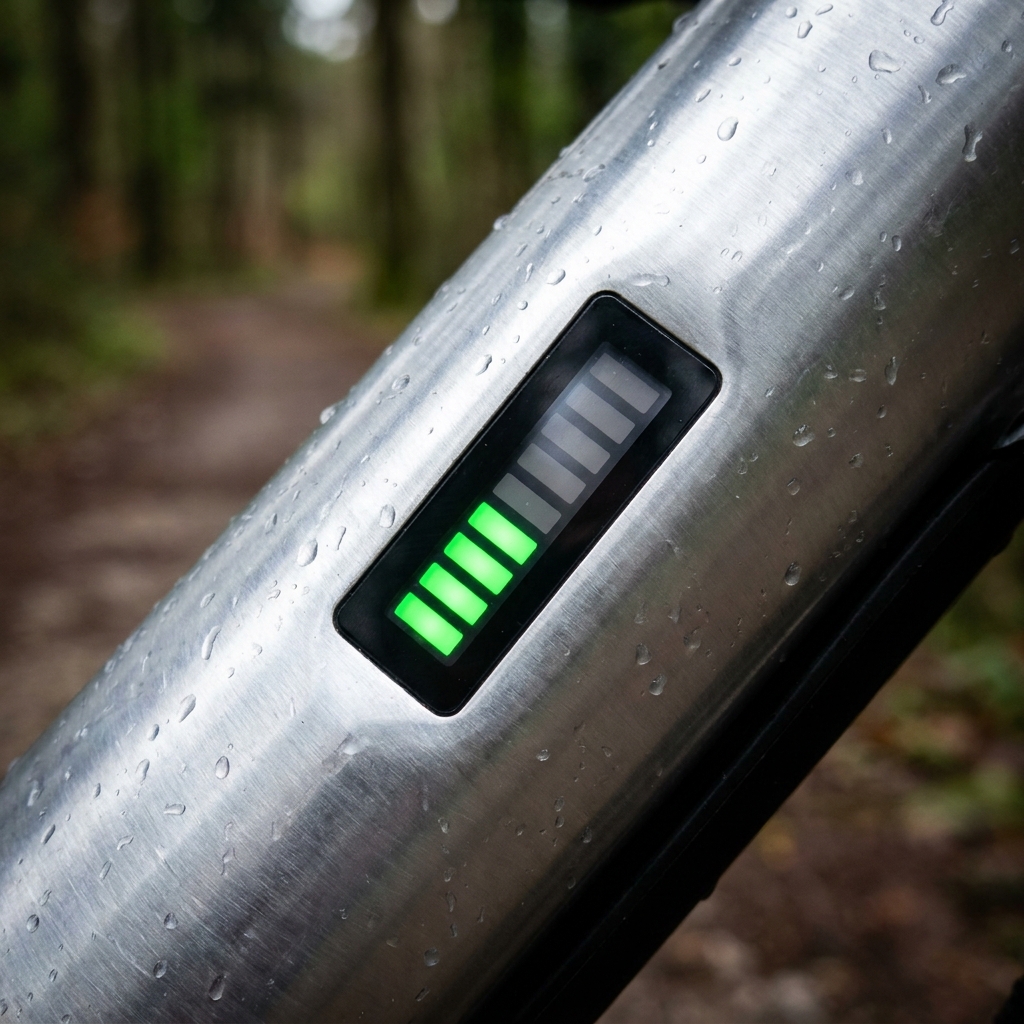
Never store your battery completely empty, and ironically, never store it completely full at 100%. Storing a battery at 0% can cause it to fall into a deep discharge state from which it may never recover. Storing it at 100% for months puts unnecessary stress on the cells. The ideal storage charge level for a lithium-ion battery is right around 50% to 60%.
When preparing for long-term storage, charge or discharge the battery to roughly 50%. Remove the battery from the e-bike if possible, and store it in a cool, dry, temperature-controlled environment inside your home. Because batteries naturally self-discharge very slowly over time, you should check the battery every month or two and top it back up to 50% if it has dropped significantly.
Cleaning and Physical Care
Taking care of the physical exterior of the battery and its connections is also important. Keep the battery clean and dry. If you ride in wet or muddy conditions, wipe the battery down with a damp cloth afterward. Never use a high-pressure hose to clean your e-bike, as water can easily force its way past the seals and into the sensitive electrical components.
Regularly inspect the metal contact points where the battery connects to the e-bike. These contacts must remain clean and free of dirt, grime, and corrosion to ensure a solid electrical connection. If they appear dirty, you can gently clean them with a dry cloth or a soft brush. Furthermore, handle the battery carefully. Dropping it on a hard concrete floor can damage the internal cells or crack the external casing, rendering the battery unsafe to use.
Knowing When It Is Time to Replace
Even with absolute perfect care, an e-bike battery will eventually reach the end of its usable life. You will know it is time for a replacement when you notice a drastic reduction in your riding range. If a fully charged battery that used to get you 40 miles now struggles to get you 15 miles, the cells are likely severely degraded. You might also notice that the battery loses power very quickly on hills, or that it takes significantly longer to charge than it used to.
When the time comes to replace the battery, always purchase a genuine replacement from the original manufacturer or a highly reputable third-party supplier. Never try to buy cheap, generic batteries online, as these are often built with poor-quality cells and lack proper safety management systems, making them a serious fire hazard. By following these comprehensive maintenance guidelines, you can ensure that your e-bike battery delivers maximum performance and reliability for many years, giving you the best possible return on your investment.